
As AI agents and vibe-coding tools gain traction, a broader debate is unfolding across the tech industry over what they could mean for the future of traditional apps and software, with some in Silicon Valley arguing that the rise of agents could eventually push users away from such interfaces altogether.A growing number of companies are even exploring devices built around AI agents instead of applications. That vision could be in contrast to the billion-dollar app economy championed by the likes of Apple, whose iPhone continues to heavily rely on third-party apps and the ecosystem of developers behind them. This is the backdrop to WWDC 2026, Apple’s annual developer conference, taking place next month (June 8-12).
To get a sense of what app developers themselves make of all this, The Indian Express spoke with a handful of iOS platform engineers and indie creators at the Apple Developer Centre in Bengaluru last week, some of whom have spent more than a decade building for the ecosystem. What we found was something underrated and more nuanced than a crisis in waiting.
Shipping an app generated from a few prompts is not the same as understanding user needs, such as why a colour-blind guitarist might find a tick mark more accessible than green and red tuning indicators or why someone may prefer on-device expense tracking.
Nikhil Nigade, the developer behind Pockity, a personal finance and budgeting app, talked about how his poor relationship with money growing up led him to build a platform that allows users to trace exactly how money moves between their income, savings, and expenses. “I wanted it to be a friendly thing, a calm exercise, not something you do at the end of the month, like a chore or homework that has been pending for many weeks,” he said.
Pockity is built entirely using Swift UI, Apple’s programming language for developing apps for its various platforms. It is designed with multiple entry points to help users log transactions in seconds. “While a lot of apps prioritise for the amount of time users spend in the app, I want people to spend as little time as possible because they are doing something else in life,” he said.
Nikhil Nigade, developer of Pockity. (Image credits: Apple)
When asked about the potential impact of AI agents on the app economy, Nigade opined, “AI agents will rapidly accelerate what users can do on their devices especially with future integrations with apps. For developers, this means visibility to a new cohort of users which previously never discovered your app organically. Directly co-related with revenue.”Story continues below this ad
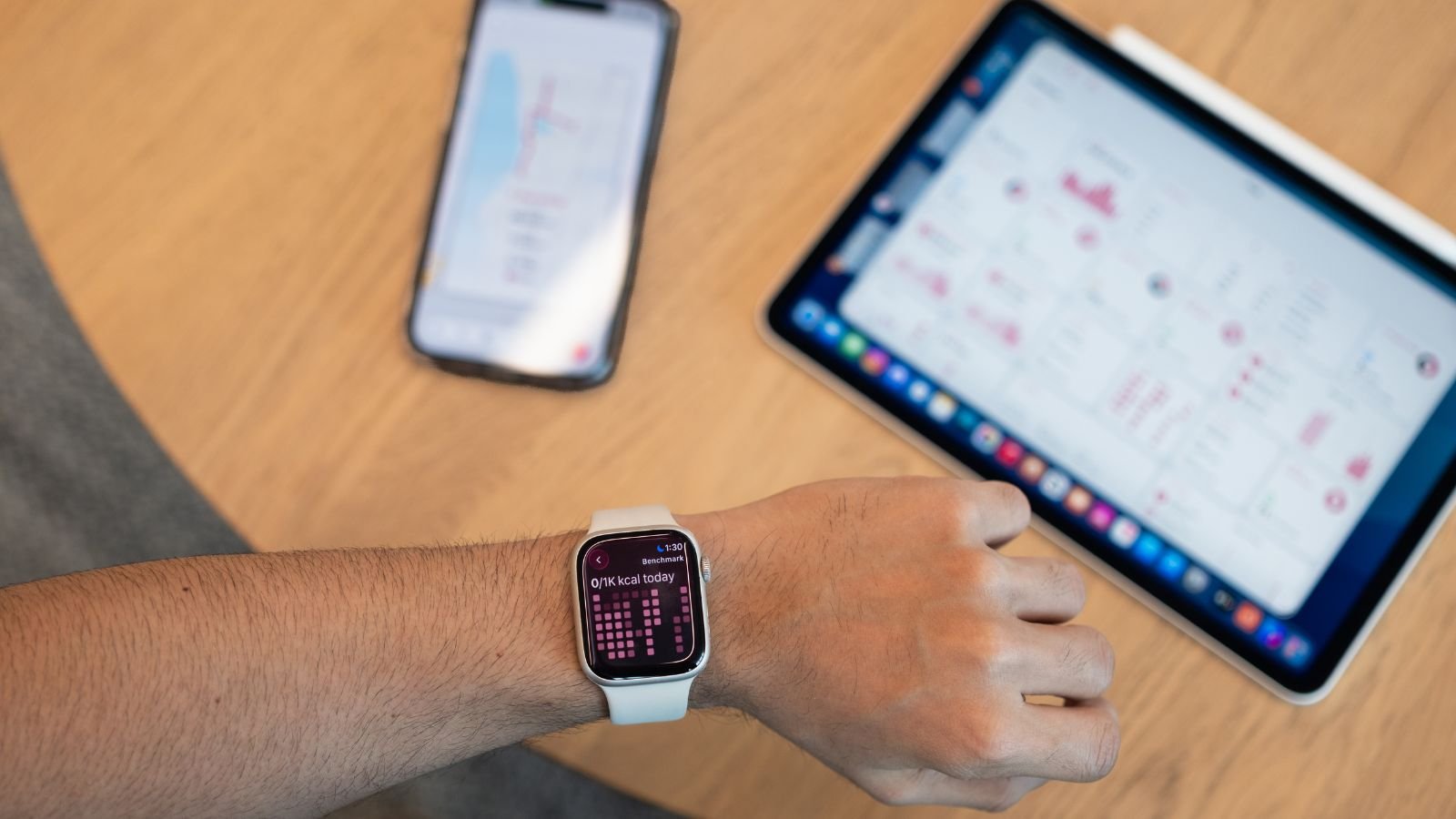
Another app featured in Apple’s Developer Showcase in Bengaluru was Peak, which aggregates data from HealthKit — the same framework behind Apple’s Health app — and streamlines it into a block-based interface while giving users the option to create customisable dashboards based on their individual health priorities.
Harshil Shah, a Mumbai-based developer, said that the idea for Peak was born amid the COVID-19 pandemic. “During the lockdowns, I became very sedentary. Even going outside for a walk felt dangerous because you could run into someone and get the virus. I’m a tech guy, so my first decision was not to buy running shoes or a gym membership, but to buy an Apple Watch. Over time, I found that it was not enough as it provided only three health goals,” he said.
Peak is designed to be fully user-controlled with contextual health data tracking at the centre. “My current fitness goal might be lifting, but that may not always be the case. Maybe later I decide I want to get into running, train for Hyrox, or start playing pickleball. Goals change over time, so the user, not the app, should be in charge,” he added.
Like Pockity, Peak is built using Swift UI and also leverages Apple’s Widget Kit that lets users create custom widgets to track their workouts without having to open an app on their home screen.Story continues below this ad
Harshil Shah, developer of Peak. (Image credits: Apple)
Asked if AI coding tools make it easier for others to spin up their own versions of Peak, Shah said, “It’s great that vibe-coding is letting people build things which they previously could not. At the same time, LLMs [large language models] are not deterministic and their outputs are not guaranteed to be accurate. So you need to be in a position to verify those results, especially with regards to sensitive health and fitness data.”
The AI app rebirth
Contrary to the hypothesis that AI-powered tools will replace apps, app releases worldwide in the first quarter of 2026 were up by 80 per cent year-over-year on the iOS App Store alone, according to a report by market intelligence firm Appfigures. Rather than viewing AI as a threat, the developers in Bengaluru seemed focused on deeply integrating the technology into their apps.
Take Zoho Notebook: a cross-platform, AI note-taking app that helps users capture ideas using text, checklists, audio, sketches, and photos in visually organised virtual notebooks.
With more than eight million downloads so far, the ad-free platform is catered to the needs of students as well as working professionals. It comes with Apple Intelligence features such as Writing Tools in the Text and Checklist Cards, along with support for Apple Pencil 2 (including palm rejection) and at least 10 Indian languages.Story continues below this ad
Mohideen Sheik Sulaiman, principal iOS engineer at Zoho (left) and Ashok Ramamoorthy, senior product manager at Zoho. (Image credits: Apple)
On whether a cross-platform app is a fit for Apple’s ‘walled garden’ ecosystem, Ashok Ramamoorthy, senior product manager at Zoho, said that Zoho Notebook has an option for users to back up their data and import it onto a new device or platform.
Zoho Notebook is also said to have integrated Liquid Glass from the first day of its release. On the hardest part of adapting to Apple’s controversial design language aesthetic, Mohideen Sheik Sulaiman, principal iOS engineer at Zoho, said, “The app felt noticeably faster, lighter, and more responsive, while also delivering a refreshed visual experience. Users found it much easier to locate notes, whether by browsing within notebooks or using search.”
“Some early feedback highlighted a need for stronger consistency in applying Liquid Glass principles across the entire app, particularly in areas such as Settings,” he added.
Arima and Aman Jain, developers of Letter Flow. (Image credits: Apple)
Alongside the debut of Liquid Glass at WWDC 2025, Apple also announced that it is opening up access to Apple Intelligence models for app developers via the Foundation Models Framework. Letter Flow, a Wordle-inspired puzzle game developed by Arima and Aman Jain, is an example of an app that has effectively leveraged Apple’s own foundational models hosted on-device while saving on cloud API costs. It also embraces Liquid Glass and uses Apple’s Metal graphics and computing API to generate background themes.Story continues below this ad
The autofill feature in Pockity also relies on a combination of Apple Intelligence models and its own machine learning (ML) model trained using Create ML for on-device processing, while other features such as the built-in receipt scanner is powered by Apple’s Vision Framework, reinforcing the idea of AI/ML as a silent engine behind apps that was once a common approach to app development.
Accessibility as first principles, not afterthought
Guitar Wiz is an all-in-one toolkit for guitarists available across iPhone, iPad, Mac, and Apple Watch. The app was created by two guitarists who played together in church, with one mentoring the other. It comes with several features including a precision tuner, metronome, chord library, etc.
“Practice as a guitarist can feel fragmented, requiring separate apps for tuning, rhythm practice, chords, songwriting, and song structures. Constantly switching between them wastes time and interrupts creative flow. Guitar Wiz solves this by bringing everything into one seamless experience,” Steve Zubin Alfred, one of the app’s developers, said.
The app’s strongest differentiator, however, is accessibility. For instance, it goes one step further than High Contrast mode in iOS 26 to show chord diagrams in black and white monochrome for colour-blind guitarists. It also replaces colour-based indicators with check marks, allowing them to easily tell whether they are playing the correct note.Story continues below this ad
Steve Zubin Alfred, one of the developers of Guitar Wiz. (Image credits: Apple)
For visually impaired users, Guitar Wiz offers voice-over accessibility feature. There is also a feature called Song Sheet Scanner that uses Apple’s Vision Framework to scan handwritten sheet music and generate an audio preview so that musicians can practice on the go. Similarly, Song Maker lets users rearrange chords in different parts and see what kind of emotions they give out in order to essentially compose a tune.