
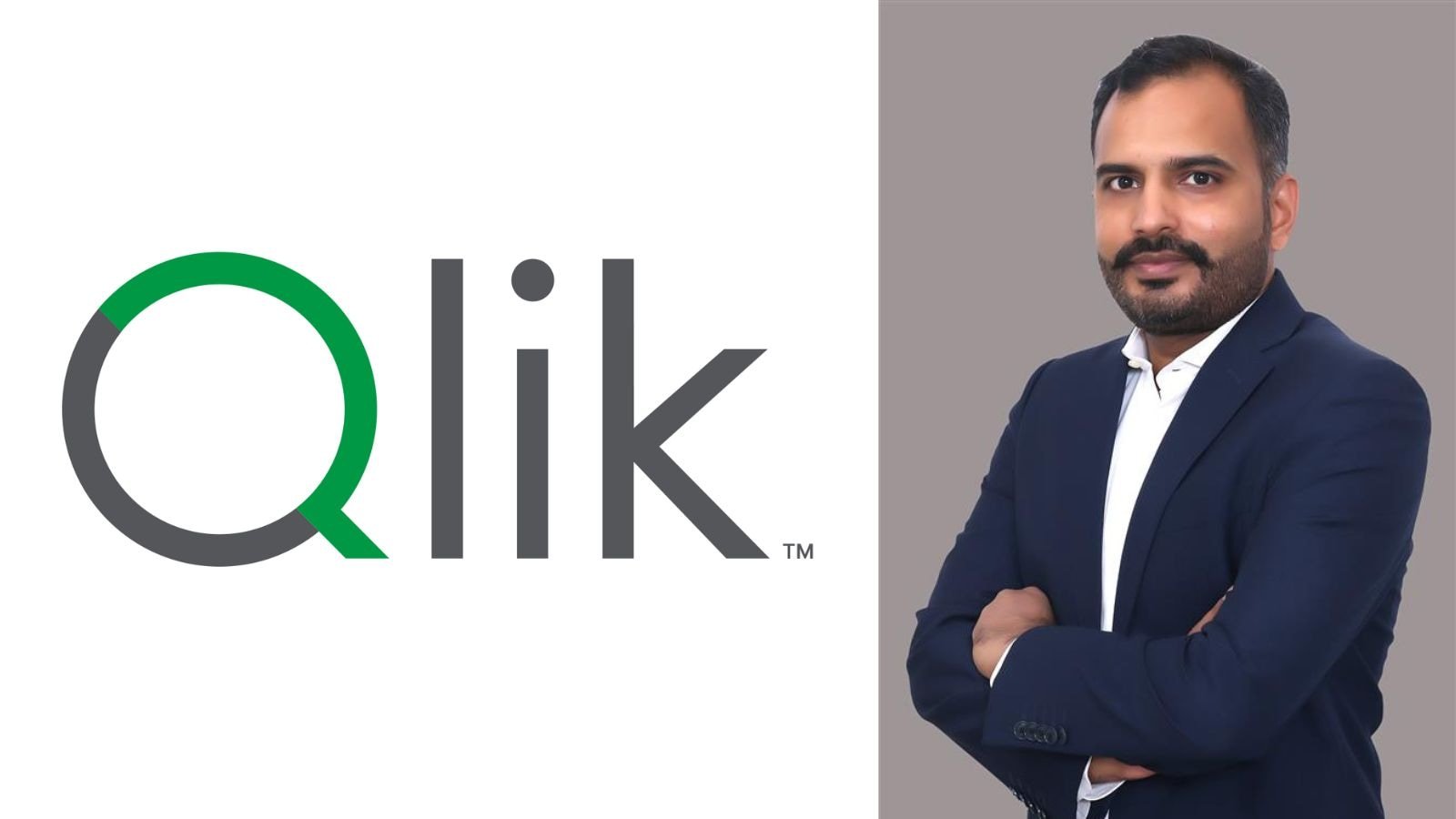
“Data governance is equal to trust. Can I trust my data to run AI models on it? Can I trust my data to make decisions based on it?” said Varun Babbar, vice president and India managing director at Qlik, summing up the core theme of Qlik Connect 2026 – a shift from experimenting with AI to deploying it at scale, rooted in trust in data. In conversation with indianexpress.com, Babbar shared that when he meets enterprises today, he finds most AI conversations fall into three categories. The first is democratisation, which is making AI accessible to employees who are not data scientists. Second is about conversational analytics, essentially allowing users to query enterprise data the way they already interact with consumer AI tools at home. And the third, the most prominent, is agentic AI – systems that do not merely output an insight but also act on it.
“At home we are using ChatGPT, Claude, and Gemini for almost everything. Gone are the days of using the search bar. People now want the same conversational experience with their enterprise data – they want to ask a question and get an insight that helps them take action,” Babbar said.
Regardless of whichever of these three topics a conversation starts with, Babbar pointed out that it almost always circles back to the same underlying concern – data. “You cannot realise any of these use cases without the right data foundation,” he said. And this draws enterprises into deeper discussions about governance, quality, lineage, and architecture. Though less glamorous, they have emerged as more consequential work that determines whether an AI investment by enterprise pays off.
India as an early adopter
When asked about India’s enterprise AI market, Babbar gave a more nuanced take. According to him, India is an early adopter in terms of efficiency-focused applications. This means companies are focused on deployments where AI improves individual productivity instead of transforming entire business processes. “The change that has happened is that over the last year or two, people were throwing every problem at the LLM. Most were failing because not every problem is to be solved by a single solution,” he explained.
“With time, people have realised the importance of the right data foundation, and now organisations are driving genuine value from these investments.”
This evolution reflects a global pattern. In the early years of the current AI wave, enterprise pilots spread rapidly while production deployments lagged. The proof-of-concept phase generated enthusiasm but was limited when it came to outcomes. Babbar argued that the approach itself was the problem. “Earlier, people were more inclined towards experimenting because it was exciting. Organisations were throwing everything at AI – a lot of experiments, a lot of proofs of concepts – but they were not getting productionised because there was no real value behind those use cases.”Story continues below this ad
However, today, he shared that organisations are starting from the outcome and working backwards to the technology. This is a reversal, according to him, that has meaningfully improved the rate of successful deployments.
The data conundrum
During the conversation, one of the more striking observations Babbar offered concerned the composition of enterprise data. According to him, in most organisations, more than 80 per cent of data is unstructured, meaning it consists mainly of emails, PDFs, and documents, while databases account for only around 20 per cent. However, analytical efforts have historically focused almost entirely on that 20 per cent.
“There is a lot of value sitting in the rest of the 80 per cent. Organisations are now revisiting their architectures on how they are going to integrate structured and unstructured data and analyse them together,” he explained, adding that this is the problem Qlik Answers was built to address. The tool, first launched to work with unstructured data, has since been extended to support simultaneous queries across both structured and unstructured sources. Babbar also pointed to the company’s data products concept, which is a governed, searchable marketplace where users can find and trust enterprise data sets, similar to how consumers search an e-commerce platform for a product of their choice.
According to Babbar, this urgency of getting data governance right has been further sharpened by regulatory developments. India’s Digital Personal Data Protection Act, 2023, introduces penalties for mismanagement, adding a compliance dimension to what was previously a purely strategic conversation. Even in the public sector, Babbar has observed a notable shift. “Over the last year or two, I have seen many RFPs coming even from public sector entities talking about consolidating data and creating golden records for citizens so that they can have a governed, trustworthy mechanism for their businesses.”
On the move towards Agentic AIStory continues below this ad
One of the key highlights of Qlik Connect 2026 was its push into agentic AI, which was exemplified by its offering of Discover Agent, which is a system that has been designed to offer insights from data continuously without human prompting. More prominent than any single product, however, is the underlying vision, which is agents from multiple platforms working together to close the loop between insight and action.
Babbar demonstrated this point with a practical scenario. Under current conditions, a user spots an inventory shortfall on a dashboard and alerts a colleague, who raises a ticket in a system like ServiceNow, and everyone tracks resolution through email. In an agentic architecture, the same chain of detect, decide, and act happens automatically. “As soon as an agent finds an insight and determines there is going to be a shortage of a particular inventory at a specific store, a ticket is automatically raised in the procurement system. No manual intervention. The action is delivered at a much faster pace.”
The Qlik executive shared that this is also the logic behind the company’s recently announced partnership with ServiceNow. This is also why he is bullish on the Model Context Protocol, an open standard that allows agents built on different platforms to communicate with each other. “The more you collaborate, the more the platform becomes open. Building a more open ecosystem and more collaborations within organisations is going to be critical to making this work at scale.”
Governing the pace of change
For all its promise, Babbar is candid about the governance challenge. The pace of AI development, new models arriving almost weekly, creates pressure on companies to keep rebuilding. However, his observation is that the organisations navigating this in the best way are those that have formalised their AI decision-making. “Companies have built AI governing councils. There are Chief Data Officers as a distinct designation now and Chief AI Officers in some of the larger organisations. They have built a mechanism to govern their AI projects, which was not there a few years back. Now it is run as a more governed, structured programme – and hence the technology becomes almost interchangeable.”Story continues below this ad
The implication here is that the organisations more likely to benefit from AI are not those chasing the latest models but those with the data foundations, governance structures, and use-case discipline to deploy it meaningfully. On that measure, Babbar suggested, the conversation in India has already moved a long way.