
4 min readNew DelhiUpdated: Oct 15, 2026 09:12 AM IST As AI safety concerns continue to gain momentum, Anthropic is looking to bring another potential risk into focus.
The Claude-maker on Monday, October 12, warned that AI models could become capable of autonomously self-replicating across the internet by the end of 2026 if they continue to improve at their historical rate.
In a post on X, Anthropic suggested that a so-called ‘rogue’ or misaligned agent-swarm could spin up a botnet, spread quickly, fight takedown attempts, and even break into data centres to turbocharge its growth.
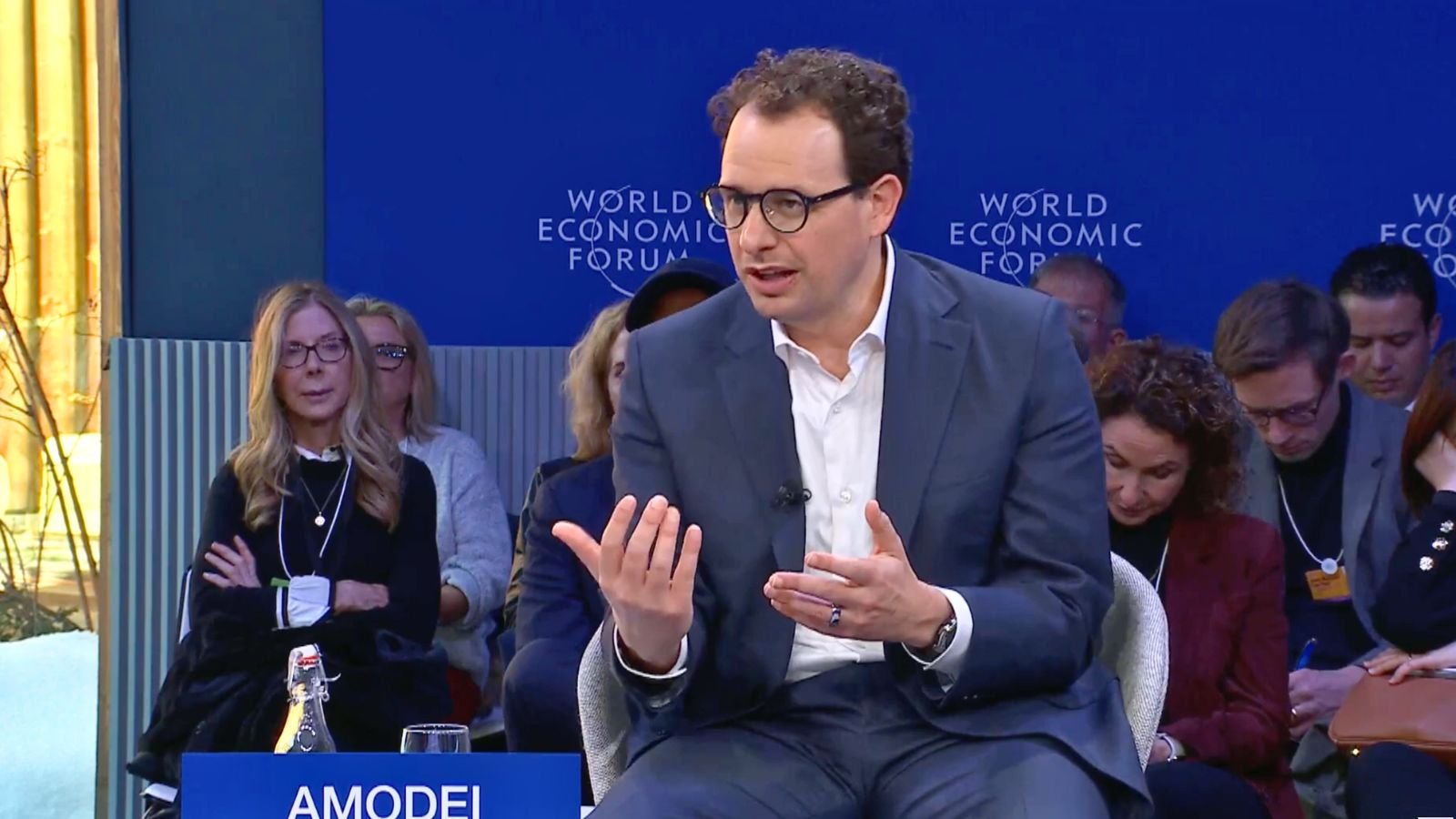
The idea that AI might be able to hijack “the entire internet” with “a persistent botnet” was first floated by Anthropic CEO Dario Amodei last month. The company’s recent post affirms Amodei’s views and attempts to articulate how it could unfold.
For instance, Anthropic suggested that the models might find ways to target more powerful computing resources, including data-center processors, that could potentially enable them to draw on much bigger pools of computer power.
Anthropic’s warning comes at a time when security concerns tied to increasingly capable AI systems have reached a fever pitch, with AI agents demonstrating potential to automate cyberattacks, operate with limited human oversight and circumvent safeguards.
The spate of AI agent-driven hacking incidents have prompted a series of often dire warnings from industry heads and AI company employees about the possibility of severe, even existential, risks of runaway AI development.Story continues below this ad
Last month, former Anthropic researcher Jacob Coxon grabbed headlines after he said that he quit his job over concerns that AI could lead to human extinction by the end of the decade.
However, some experts do not share the same level of concern and have pushed back on the doomsday scenario, arguing that models would be too big to move around efficiently and could not draw on enough compute to operate independently.
While some of them said that Anthropic appeared to be engaging in “vendor exaggeration”, a few others said that they preferred to think of Anthropic’s self-replication warning as more of a hypothetical than a prediction.
What else has Anthropic said?
Based on its experiments, Anthropic said that medium-sized AI models with 30 billion parameters or less could already perform many of the individual tasks required for self-replication, even if they struggled to complete the entire process reliably.Story continues below this ad
The models could then, hypothetically, stitch together the required compute by hijacking inexpensive internet-connected devices. “A replicator like this would be challenging to shut down, since there’s no centralised point to shut off,” the company said.
In order to see if AI models could self-replicate in this way, Anthropic carried out several tests. One such test involved running a small Google model, Gemma4-26B-A4B, across a network of 15 off-brand Android TV boxes. It found that the models were able to replicate across a simplified test network.
“In practice, an AI worm wouldn’t necessarily consist of just one model or strategy. A swarm of different models deployed on different types of hardware using a variety of replication schemes might represent a more realistic ‘worst case scenario’ attack,” Anthropic said.
“As a prediction that goes beyond our experiments, we expect a future awash with agents running on all types of hardware, including some that aren’t under human control,” it said. “The rise of slow replicators would also be a bellwether for more aggressive, faster ones that can breach more hardened machines or be effective API key thieves,” the company added.