
As fears grow over AI tools moving beyond assisting software-as-a-service (SaaS) companies to replacing them entirely, Salesforce representatives attending the AI Impact Summit this week, pushed back against talk of a looming ‘SaaSpocalypse’ and said that even leading model developers rely on its enterprise platforms for mission critical functions.Earlier this month, the launch of AI startup Anthropic’s new suite of workplace automation tools sent shockwaves through global technology markets, including Indian IT stocks, with big names such as TCS, Infosys, Wipro, and HCL Technologies nosediving 4-7 per cent and the Nifty IT index plunging nearly 6 per cent, the biggest single-day fall since COVID-19.
The episode was termed ‘SaaSpocalypse’ in reference to SaaS companies facing potential obsolescence due to AI disruption. However, the Slack parent has argued that it will still see benefits and opportunities in this new landscape.
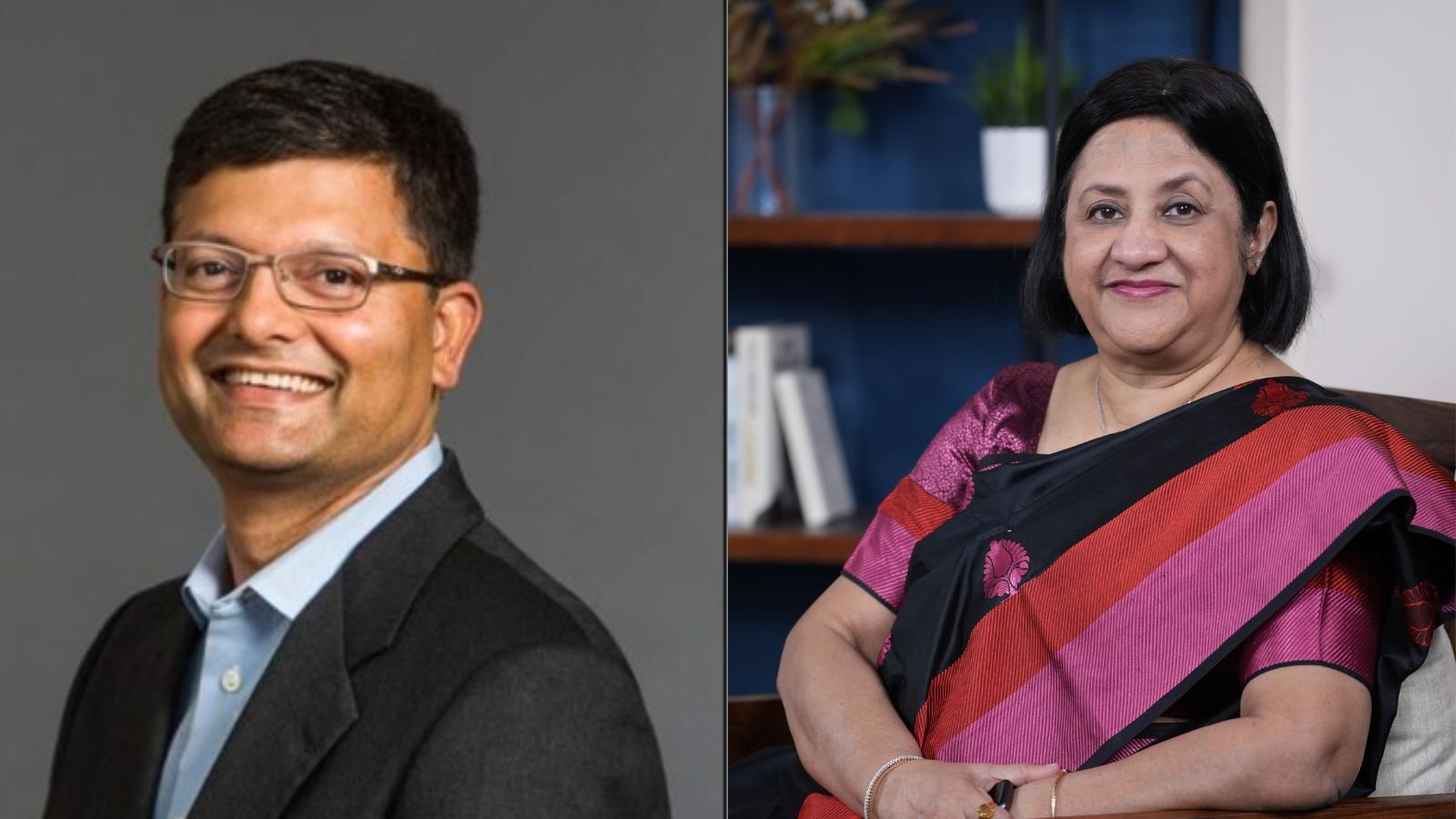
In an interview with The Indian Express on the sidelines of the AI Impact Summit 2026 in New Delhi, Arundhati Bhattacharya, the CEO of Salesforce South Asia, and Srini Tallapragada, the company’s chief engineering officer, make a case for the SaaS business model in the era of AI-driven automation. The conversation also covered moving beyond AI pilots to full-scale production, maintaining AI governance and ethical standards, the rise of vibe-coding tools, and the Indian government’s envisioned UPI-like sovereign AI stack for MSMEs and others.
Edited excerpts from the interview:
Q: One of the key issues on a lot of minds right now is whether large SaaS companies are at risk as businesses experiment with building internal AI tools or deploying models directly, in some cases bypassing traditional software interfaces altogether. What is Salesforce’s answer to this?
Tallapragada: The ‘SaaS is dead’ narrative is counterfactual. It’s very hard to prove or disprove. We work with a lot of customers, including model vendors like Anthropic and OpenAI that not only use our products like Slack but also our CRM [customer relationship management] products.
Software companies work on what is core to them. We use Workday for HR software. I have a lot of engineers but can I vibe code away this software? No. First of all, it’s not our business. Why would I waste my time on that? Secondly, it’s not enough to just do version one. You have to think of all the regulatory aspects and other details.Story continues below this ad
A lot of our company vendors are going to use mission critical systems like Salesforce’s offerings. So, this narrative that ‘SaaS is dead’ is generalised. But SaaS is going to evolve. Like any other industry, if you’re not adding value to the customer, you’ll be disrupted.
Bhattacharya: The way we do things is going to change. But does that mean we ourselves will no longer be in the equation? I don’t think so. Because when you are running a company, an LLM is not the only thing that’s required. It requires context, reasoning, governance, and auditability.
We are using agents ourselves, both internally and externally. We have nearly 20,000 customers in various stages of implementation, 50 per cent of them are refilling their tanks with whatever they have already bought. A number of our customers are saying that they are seeing actual value. So, whether we are really going to be here or not, after 10 years you can come back and ask me that question.
Q: Can India’s $300 billion IT sector adapt by forming deeper partnerships with AI companies and building AI-native solutions? And who is better placed to lead that shift?Story continues below this ad
Tallapragada: It comes down to leadership and willingness to change. We are working with a lot of our System Integrators (SI) partners, and they’re also changing how they deliver services. Some of our big SIs in India are implementing AgentForce because they want to re-imagine how they deliver services. Most of them understand that AI is foundational, and if you don’t change the way you’re delivering services and outcomes for customers, you’re not adding business value and you’ll get disrupted.
Q: Is there a deployment gap between the power of AI and the capacity of businesses to use it? And can companies like Salesforce play a meaningful role in closing the gap?
Tallapragada: There is a gap between the model vendors and the hype machine talking about AI, versus the real business value customers are actually seeing in their profit and loss (P&L) statement. A lot of people have assumed that simply rolling out a model is enough. “I buy a model, I give ChatGPT to all my employees, and declare victory.” They thought that was sufficient, but now they are all realising that it is not enough.
What we have focused on is ignoring the hype and working closely with our customers. We now have thousands of customers using our products and demonstrating real business value. We do this industry by industry so we can share best practices. For example, in aviation, we work with Southwest Airlines, Finnair in Europe, Singapore Airlines, and Air India. When we speak to the next airline, we can point to these leaders and say: here are the best practices, here is what works.Story continues below this ad
Companies can try to do it themselves, which many have not been successful at, or they can use our platform and our vertical expertise to generate measurable business value.
Q: Based on your unique vantage point, how would you characterise the rate of enterprise AI adoption today, both in India and globally?
Tallapragada: I call last year pilot purgatory because people did a lot of pilots and demos of AI but nothing changed. I think CEOs are tired. They’re saying, “Hey IT teams, we have invested a lot. Now show me value.” This is good news because enterprises are realising that they need good partners like Salesforce.
We have one of the largest implementations compared to anyone. We got more than 30,000 customers trying to use AI tools and agents. But it’s just a drop in the bucket. It’s still not diffused across sectors. This will be the year of value. It will be the year AI goes from pilots to ROI.Story continues below this ad
Q: Many companies cite issues like hallucinations, reliability, and security risks as barriers to deployment. To what extent does enterprise adoption depend on further technical breakthroughs in AI research?
Tallapragada: There are a lot of mitigating factors. LLMs are commodities and there’s not much differentiation between one model versus the other. They are all going to continue to improve. But there is still enough value to be had, and that’s why enterprises should focus on what is the value you can get from AI today.
Q: At a recent press conference, IT Minister Ashwini Vaishnaw said that the next phase of India’s AI mission will focus on a UPI-like platform with a bouquet of ready-to-use AI solutions in key sectors for MSMEs. Do you think this is a viable solution?
Bhattacharya: There has been discussion around building a public rails type of platform, on top of which private players could build their stacks. If it happens, we will assess whether that is something we want to participate in. The idea is there, and I am sure it is feasible. But we will have to wait and see how it actually takes shape.Story continues below this ad
Q: Do you see the rise of vibe coding tools as a competitive threat?
Tallapragada: Historically, Salesforce has been a low-code platform because when customers buy something, they want to get the fastest value. I think vibe coding tools will take off in a bigger way because it reduces time to value. Instead of taking 30 days to see results, companies can realise value much faster, and then build even more on top of it.
But on day three or day four, at 2am in the middle of the night, when something goes wrong and an engineer wakes up to a pager alert, they cannot be looking at each other and saying, “Who wrote this code? Some AI wrote this.” That is not what enterprise customers expect. So what we built is a tool that follows the same guardrails around security, governance, and privacy, so companies can build safely.
Q: Should enterprise AI be regulated differently than consumer AI products and tools?Story continues below this ad
Bhattacharya: Individual countries will have to decide their approach. It is still early in the cycle, so many are trying to maintain a light-touch framework. But with lighter regulation, it becomes even more important for companies to practice strong self-regulation.
Since 2014, Salesforce has had what it calls an office of humane and ethical use of technology. All of our products and processes go through that office to ensure we are not doing anything harmful. We also invest heavily in monitoring cyber threats around the world. Across all our processes and products, we build in accountability and auditability so that decisions can be traced. You can go back and see who made which decision, why it was taken, and which agent did what.