
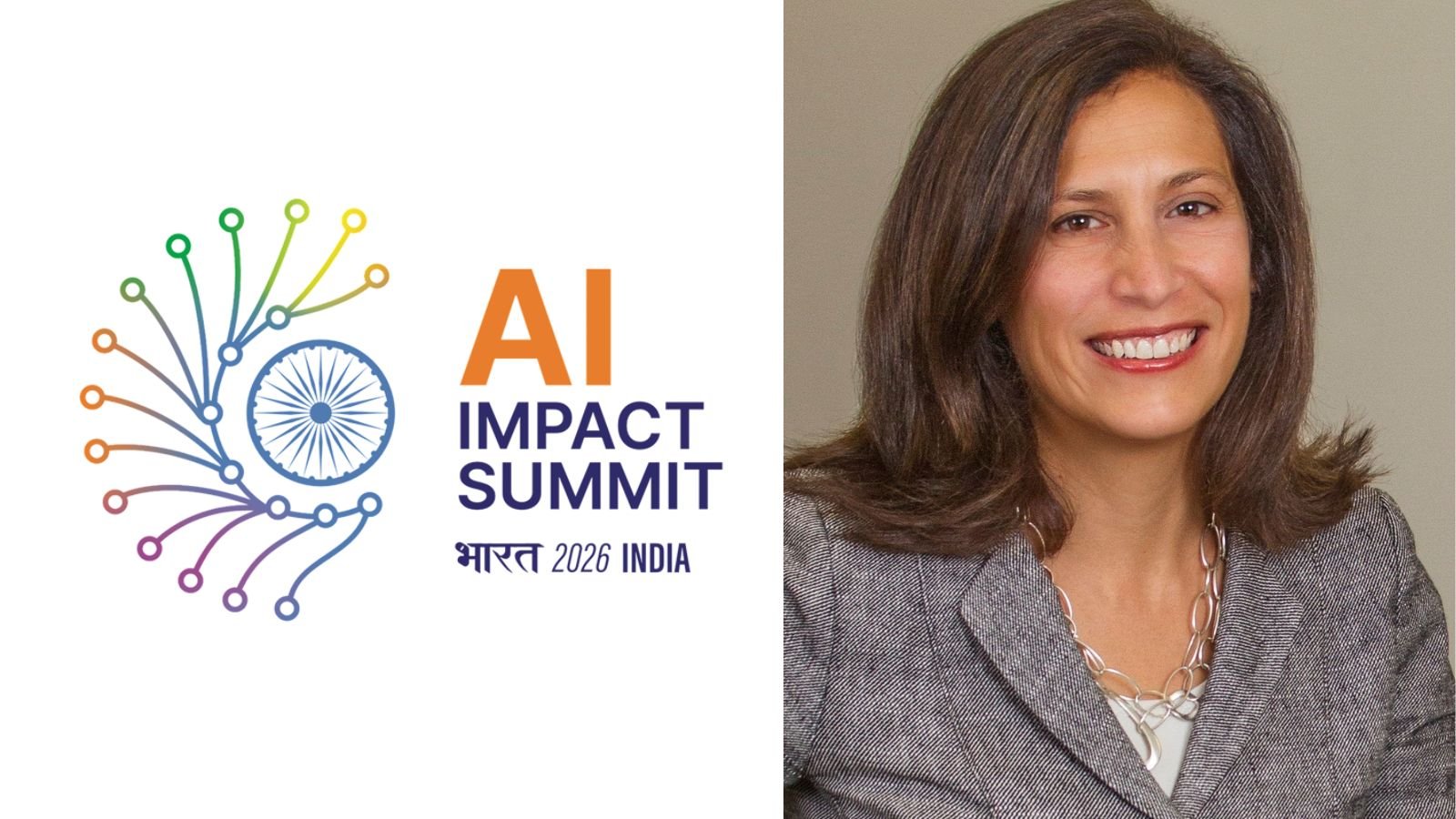
As India and the US look to formalise the interim trade deal after announcing its broad framework earlier this month, Victoria Espinel, the CEO of Business Software Alliance (BSA), a global industry group representing major software and cloud companies, said that both countries have an opportunity to set a new global benchmark for digital trade rules.The US on Wednesday, February 11, revised a factsheet it had released on February 9 about the trade deal with India. The updated document dropped the initial claim that “India will remove its digital services taxes” while retaining that “India committed to negotiate a robust set of bilateral digital trade rules that address discriminatory or burdensome practices and other barriers to digital trade.”
Espinel urged both sides to address software-related regulatory and cloud adoption barriers as part of continued negotiations. In previous submissions, BSA has also pushed for exemptions to software and cloud providers from ‘Make in India’ public procurement rules, which mandate preference for domestically manufactured goods in public procurement.
In an interview with The Indian Express, Espinel expanded on the software industry’s concerns amid the interim India-US trade pact. The former US government trade negotiator and AI advisor also spoke about the Centre’s new due diligence framework for AI-generated content, the proposed licensing regime for AI training data, and enterprise AI adoption ahead of the AI Impact Summit 2026 in New Delhi next week.
Here are the edited excerpts:
Q: You have advised on trade and AI policy across multiple US administrations. How has Washington’s approach to AI regulation and digital trade evolved over the years?
Espinel: My first stint in the US government, and the first time that I had the opportunity to visit New Delhi, was when I was a trade negotiator at USTR from 2001 to 2007. While I was there, I was asked to create and head up the first intellectual property (IP) and innovation department at USTR (Office of the United States Trade Representative).
We were negotiating with many governments around the world, including the government of India. It was always a pleasure to get to interact with my Indian counterparts on the various issues that we were discussing with them. I also served President Obama for four years, advising him on IP issues.Story continues below this ad
In my capacity as BSA CEO, I served on the president’s trade advisory committee for President Obama and part of the first administration of President Trump. I also served on the national AI advisory committee set up under President Biden.
The Biden administration issued an executive order. It was the longest executive order in US history, and took a detailed risk-based approach to AI. The Trump administration repealed that executive order and put forth its own AI action plan, which is similar in the sense that it also takes a risk-based approach to AI.
It is encouraging to see how many governments in recent years have adopted a risk-based approach to AI regulation, assessing systems based on the potential impact on a person’s life, health, or employment, and tailoring obligations accordingly. In that sense, the Biden and Trump administrations, as well as governments in Europe, Japan and South Korea, have taken broadly similar approaches.
Q: On the India-US trade deal, the revised factsheet drops the reference to removing digital services taxes and speaks more broadly about addressing ‘barriers’ to digital trade. How should we read that? What specific barriers do you expect to be addressed?Story continues below this ad
Espinel: Progress between the US and India on a trade deal is always encouraging. India is an enormous commercial market, and other governments around the world watch what happens in India as well. There are a number of barriers that we are concerned about in the software industry. Some of those are related to government procurement. Some of them are related to regulations that make it more difficult for cloud adoption.
We would encourage both sides to be thinking about those issues and working on resolving those issues in the context of the trade negotiations. Obviously, there’s going to be other issues on the table that are not relevant to the software industry, but the economic impact of software on the US and Indian economies are so important. That has to be part of the trade discussion between the two countries.
Q: The government has introduced new rules mandating strict 3-hour content takedown timelines for online platforms, as well as regulating the creation and dissemination of AI-generated content online. What is your reaction to the final framework? How different is it from the earlier draft or from what the BSA had submitted?
Espinel: In terms of the synthetic content labelling rules that came out, I would say three things. The definitions seem better. They seem tighter and more precise. So that’s a positive. We are concerned that the prescribed content takedown timelines are more burdensome than they need to be, and they’re going to create some compliance and implementation issues. We will continue to have conversations with the Indian government about that.Story continues below this ad
But my biggest concern is that the new rules on synthetically generated information do not distinguish between different parts of the tech industry, such as enterprise AI and consumer-facing platforms. That distinction matters when designing privacy or AI regulation, and we will continue to engage with the Indian government on this.
Q: Given that the US has previously pushed back on foreign regulations it sees as targeting American tech firms, how should governments balance domestic regulatory objectives with commitments under bilateral trade agreements?
Espinel: As a former trade negotiator, I find that to be an interesting question. There’s certainly room inside of a trade agreement for governments to be able to accommodate their domestic regulation.
But digital trade provisions have not kept pace with where the technology is. The highest standards were negotiated during the first Trump administration, particularly the United States-Mexico-Canada Agreement and the trade agreement between the US and Japan. Those provisions remain the high bar but they were negotiated six years ago, and the technology landscape has significantly evolved since then.Story continues below this ad
It would be tremendous for the US and India to move forward on an even higher standard of digital trade provisions, including ones that take into account developments on AI.
Q: The BSA, which represents AI firms like OpenAI, has pushed for exceptions to permit lawful use of data for AI training purposes. How do you view the government’s proposal of a mandatory royalty system for AI companies to train their models on copyrighted content? What impact do you think it will have on their revenues?
Espinel: One of the concerns with having blanket licences and royalties is that creators themselves are looking for different things. So, it might satisfy some parts of the content community, but not others. The management of such a system would also be extremely difficult. So, I believe that contract negotiations are probably the most efficient way to get to a good answer there. Creators should be rewarded for the content that they create. But a one-size-fits-all royalty scheme doesn’t necessarily do that in the best way.
Q: In a recent interview, you said that winning the AI race will depend on which country adopts AI the fastest. In that context, should India build sovereign large language models (LLMs)? Can India be both a leading adopter and global exporter of AI? If India moves aggressively on adoption, does that also increase its exposure to AI-related risks?Story continues below this ad
Espinel: The adoption of enterprise AI is going to be the differentiator for global economies over the next 10 to 15 years. There are a lot of governments that are interested in developing a sovereign LLM. But if governments are focussed on that to the exclusion of focussing on trying to encourage widespread adoption of enterprise AI across their different economic sectors, they are going to lose it all.
In terms of India being an exporter of AI, I think it’s inevitable. Whether it’s AI models or software that is embedded with AI or AI applications. There is so much talent in India.
On the risks of AI adoption, governments have to be mindful about encouraging adoption, making sure that it’s being done in a way that is responsible, and putting in impact assessments in government mechanisms to try to mitigate risk as much as possible.
Q: What outcomes emerged from the previous AI Summits at Bletchley Park, Seoul, and Paris? What do you expect to be meaningfully different about the New Delhi Summit?Story continues below this ad
Espinel: These Summits have been helpful in terms of bringing governments together. With every Summit, governments have been trying to move one step forward. We have evolved to the point where I think the correct focus is having a discussion about what kind of impact is AI going to have on our communities and our economies, and how do we derive the most benefit from that?
It’s also important for governments to hear from a broad range of perspectives and stakeholders. Certainly, when I was in the government, I sought those out.