
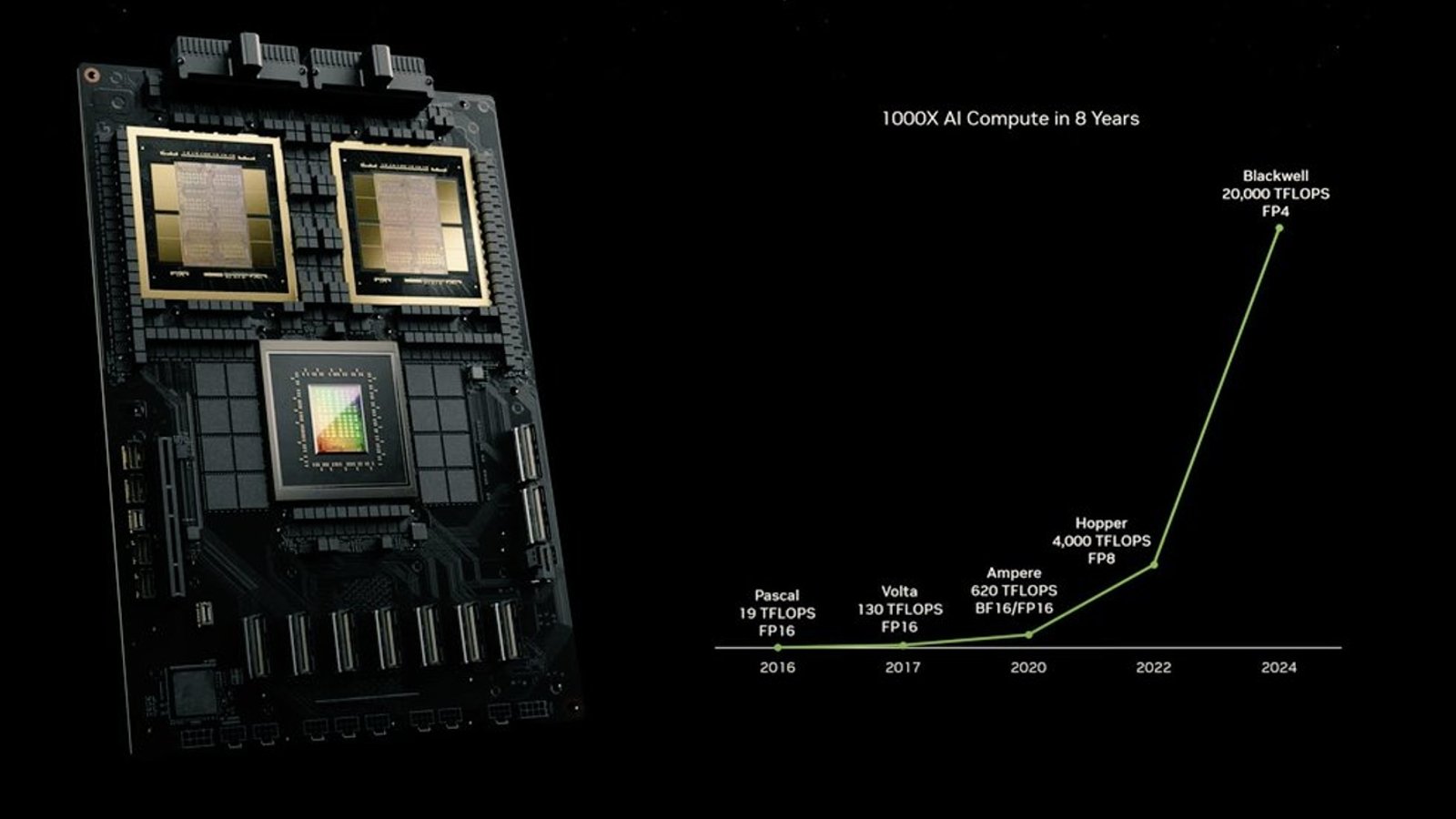
Amid growing calls to further restrict Chinese access to advanced US chips, Nvidia has said that it has stopped shipping its GPUs to China, including those approved for export to the country.Colette Kress, the chip giant’s interim CEO who replaced Jensen Huang following his resignation last week, said that Nvidia has no current plans for further shipments of its Hopper-generation chips to China. Kress made the remarks during an earnings call on Tuesday, November 17, where she also revealed that Nvidia has sold $2.4 billion worth of licensed Hopper-generation data centre products to China in the quarter ended October 25.Currently, Nvidia is allowed by the US government to ship its less powerful Hopper generation ‘H200’ and ‘H20’ chips to vetted Chinese-owned firms, with a 25 per cent tariff imposed by the US on eligible chips. Its more powerful Blackwell and Rubin GPUs are barred from export to China due to national security and competitive concerns.
Nvidia’s decision to halt Hopper chip shipments to China comes after months of lobbying from Jensen Huang, who stepped down as CEO after facing allegations he had extramarital affairs with an alleged Chinese spy and two Nvidia employees.
The move has also raised questions about the future of a special licensing agreement negotiated by Washington and Beijing. Despite parting ways with Huang, Nvidia faces pressure from US lawmakers on both sides of the aisle expressing concern that China is gaining access to the company’s advanced chips, which are critical to developing AI models.
“Our guidance does not have any licenced Hopper data centre products included, and we are no longer shipping licenced Hopper data centre products to China,” Kress said. She did not elaborate on why Nvidia had stopped shipping the processors and whether the halt would be permanent.
The recent controversy surrounding Nvidia has also deepened the technology divide between the world’s two biggest economies. US President Donald Trump arrived Tuesday in the Philippines to start a multiday swing in Asia, where he’s scheduled to meet with China’s President Xi Jinping and Russian President Vladimir Putin later this week.Story continues below this ad
Meanwhile, Chinese government officials warned the US last week against imposing additional guardrails on chip exports, which they said would disrupt global supply chains.
The US Department of Commerce’s Bureau of Industry and Security on Monday, November 16, issued an interim rule aimed at preventing Chinese companies from accessing Nvidia’s GPUs remotely through overseas data centres. In response to the new rule, Martin Lau, the president of Chinese tech giant Tencent, said that it “sets everyone back in China.”
Earlier this week, Nvidia also announced the formation of a new committee to oversee its national security policies and compliance with US export controls. The company said its existing National Security Team and Global Trade Compliance Team will report directly to the oversight body as well as Kress.
The move is expected to tackle the widely reported issue of GPU smuggling and other ways used by Chinese firms to bypass US export curbs and gain access to Nvidia’s chips. A recently published report found that leading open-weight AI models by Chinese developers contain numerical patterns or ‘fingerprints’ that suggest they were trained on export-banned Nvidia’s Blackwell hardware.Story continues below this ad
US officials and news reports have previously claimed that Chinese AI companies such as DeepSeek and Moonshot AI were using Blackwell chips for training. The new research study said its findings serve as technical evidence, extracted from the models’ own published weights, to support these past claims.
Hurdles to Nvidia’s China chip sales
Nvidia’s Hopper generation of chips such as the H200 are powerful processors that can be used to train and run AI models. They are manufactured for the chip designer by TSMC, the world’s largest contract chipmaker, in China.
In 2022, the US introduced export controls on the H200 chips and subsequently tightened China’s access to them.
However, following a summit with Chinese President Xi Jinping last year, US President Trump said he would allow H200 sales to approved Chinese customers. In January 2026, the US officially eased its licensing policy for H200 chips with export applications reviewed individually subject to security conditions.Story continues below this ad
Over 10 Chinese companies, including Alibaba, Tencent, and TikTok owner ByteDance, were approved for H200 sales.
But Chinese regulators withheld approval for large-scale H200 imports as part of its broader efforts to reduce its dependence on US technology. As a result, around 6,00,000 H200 chips are currently stored in Hong Kong, awaiting shipment to mainland China, according to a report by Reuters.