
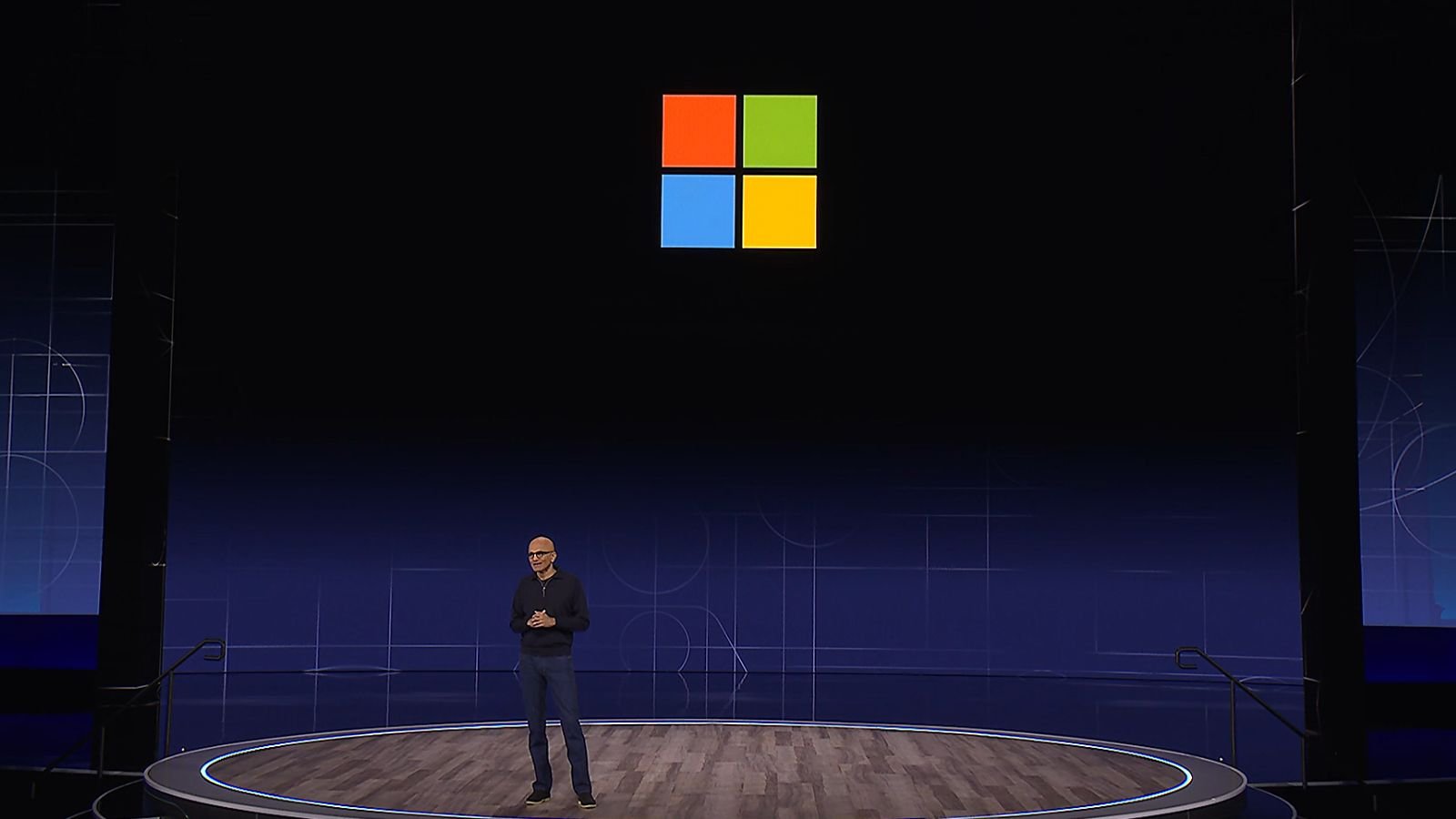
Microsoft is doubling down on in-house AI development with a slate of new models designed for specialised tasks such as coding, cybersecurity, image-generation, and more.The Windows-maker announced its new suite of AI models at its annual Ignite conference in San Francisco, California, United States, on Tuesday, November 17. Its new code-generation model called MAI Code 2 matches the performance of rival AI models from OpenAI and Anthropic at a fraction of the cost, as per the company.Microsoft also introduced a cybersecurity-focused model capable of detecting software vulnerabilities, with access initially limited to a small group of customers. It further announced new image-generation and transcription AI models as well.
After years of relying on the most advanced AI models from OpenAI, Anthropic, and other AI companies, Microsoft’s latest move suggests that it is looking to take them on by developing competitive models of its own. The software giant’s strategy appears to be focused on developing models specialised for particular tasks or applications, which allows them to achieve comparable performance at potentially much lower costs than other frontier AI labs.
However, sector-specific models also come with a trade-off. For instance, a model optimised for everyday coding tasks will not be as capable at solving advanced math or scientific research problems. To be sure, Microsoft has said it is also working on a frontier general-purpose large language model (LLM) that can execute a broader range of tasks.
Another notable aspect of Microsoft’s approach is its decision to license its models’ weights – training parameters that determine the models’ behaviour – to customers looking to fine-tune and customise the models for their businesses. While similar to open-weight AI models, this approach could offer greater security and control.
“Our ambition with everything we are announcing at Ignite today is to parlay technological advances into real outcomes and new points of leverage for people, organizations, and society at large,” Microsoft CEO Satya Nadella said in a post on X.Story continues below this ad
“This isn’t just one model. It’s not a flash in the pan. This is a system, a hill-climbing machine that we have built, which co-optimizes performance and price,” Microsoft AI chief Mustafa Suleyman was quoted as saying by Reuters.
On the recent cybersecurity reckoning sparked by the hacking of Hugging Face by OpenAI’s so-called ‘rogue’ agents, Suleyman said, preventing AI from taking harmful actions and ensuring it behaves as intended, a research area known as alignment, is a top priority,
List of models, benchmark performances
-MAI Code 2: Microsoft’s new coding model delivers 98 per cent of GPT-6.1 Sol’s performance at 40 per cent of the price and 96 per cent of Anthropic’s Claude Opus 5.5 performance at just 5 per cent of the cost. The model will be available in GitHub Copilot.-MAI Code 2 Flash: It is a smaller, faster model that matches GPT-6 Luna at 65 per cent of the price and Claude Haiku 5.5 at 20 per cent of the cost, as per Microsoft.-MAI Cyber 2 Flash: This model comes with cybersecurity capabilities and beats GPT-6 Astra on a security benchmark at less than 2 per cent of the cost per task, the company said.-MAI Image 2.7: This model ranks first in image editing, according to Microsoft. Its new transcription and real-time voice models also look to take on leading counterparts.
It is worth noting that Microsoft’s model performance comparisons rely on select benchmarks, and its pricing advantages could have to do with promotional discounts.