
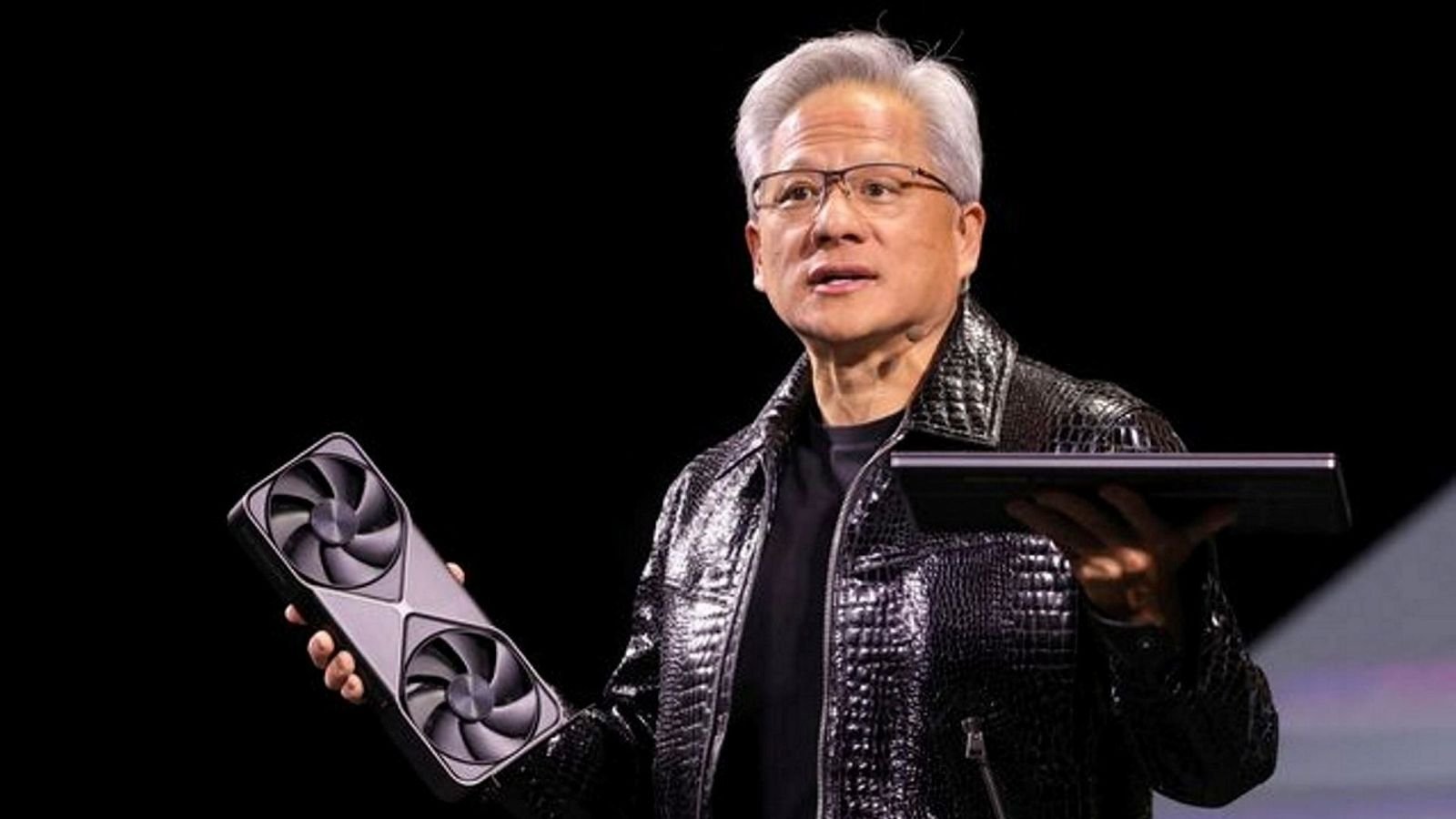
Nvidia CEO Jensen Huang has admitted to an affair with a businesswoman reportedly suspected of being a Chinese spy, raising questions about the potential fallout for the US chip giant and the wider AI industry.The company announced on Sunday, November 8, that it’s board has opened an independent investigation into allegations that Huang has been the target of a foreign intelligence effort. However, Nvidia said that the “board has no reason to believe that either national security or Nvidia secrets were compromised.” Huang will remain CEO pending the investigation’s outcome.“I was unfaithful to my wife. My actions hurt her and our children. There is no excuse for what I did. I am deeply sorry,” Huang wrote in a company-wide letter.
Huang’s admission comes days after US Secretary of State Marco Rubio drafted a memo to top Trump administration officials warning that the billionaire tech CEO was in a close relationship with Chinese citizen Alice Huang, an executive at Singapore-based Megaspeed, according to a report by The New York Times. Megaspeed is a regional cloud customer of Nvidia that builds data centres in Southeast Asian countries and also provides compute to Chinese tech giant Alibaba.
These developments could cast a shadow over the future of one of the most important leaders in AI and bring one of the most consequential companies in the AI race under greater scrutiny.
Given Nvidia’s central place in the AI ecosystem, it also threatens to further roil an AI market already shaken by investors’ concerns over the sustainability of a booming AI market and potential risk of a slowdown in spending.
In this piece, we examine the national security implications of the controversy surrounding Huang, its potential impact on Nvidia’s growth story, and whether the fallout could extend beyond the chipmaker.Story continues below this ad
What it means for Huang and Nvidia
Nvidia is the world’s second-most valuable company after Apple, with a market capitalisation of $4.5 trillion at the time of writing. By selling the chips used to develop AI models, the chipmaker has emerged as one of the firms holding up the AI boom.
The massive demand for its GPUs (Graphics Processing Units) from hyperscalers such as Amazon and Google has propelled its annual revenue from under $11 billion to more than $130 billion between 2020 and 2025. Some analyst estimates suggest that Nvidia’s sales will hit $1 trillion in 2029.
While Huang’s personal affair is unlikely to drastically affect demand for Nvidia’s products, the CEO has led the company for more than three decades and has been central to its rise to become a dominant supplier of AI chips, leading new product presentations and negotiating loans to customers that, some say, have made Nvidia ‘the central bank of AI’.
Huang also plays a key role in the geopolitical context, as he often deals directly with US President Donald Trump and Chinese leader Xi Jinping.Story continues below this ad
There have reportedly been a few instances at companies such as Boeing and McDonald’s where CEOs who did not disclose extramarital affairs and relationships to board members were ousted. But that is unlikely to be an outcome in Huang’s case as there is no clear successor and lawmakers are aware of Nvidia’s strategic importance to the US. He is also favoured by Wall Street investors such as hedge fund manager Bill Ackman and Sequoia Capital partner Shaun Maguire, both of whom urged support for Huang on Sunday.
An alert:
@JensenHuang is human. And he is an incredible human. Even incredible humans make mistakes.
He takes full responsibility as he should.
We should all support him and his family.
Onward.
— Bill Ackman (@BillAckman) November 8, 2026
1) Jensen is one of the greatest entrepreneurs of this generation
2) he did something incredibly dumb
3) it was bad for America
4) but my guess is there was no bad intention
5) two mistakes don’t make a right, and I believe Jensen is irreplaceable for America’s AI leadership
— Shaun Maguire (@shaunmmaguire) November 8, 2026
https://platform.x.com/widgets.js
Still, the allegations involving Huang could raise questions about corporate oversight at Nvidia, including whether the company’s directors and senior executives were aware of the relationship. The company had previously denied the allegations of an affair to media outlets. Nvidia could also face shareholder lawsuits and a possible inquiry by the US Congress with the incoming Democratic-led majority.
To be sure, Huang has promised to cooperate with the independent investigation launched by Nvidia’s board.Story continues below this ad
How it raises the national security stakes
US intelligence agencies had earlier issued warnings that China could target Silicon Valley tech leaders for gathering sensitive information. The scandal involving Huang may bring those concerns into sharper focus, and could serve as a reminder to other tech CEOs of the potential security risks accompanying their business and personal relationships.
The bigger question, however, is whether the recent developments could lead to further US-imposed restrictions on chip exports. Several US lawmakers fear that Nvidia’s AI chips could be used by China to build military-focused AI models and commercial AI models that could compete and surpass American technology.
Huang has meanwhile emerged as a close adviser to the Trump administration on AI and even accompanied President Trump to Beijing in May 2026. Earlier this year, Trump green-lit the sale of Nvidia’s H200 chips to be shipped to China. Part of its older Hopper generation, the H200 chips are less advanced than Nvidia’s Blackwell chips currently used by US-based AI developers.
However, the incoming US Congress is expected to push for stricter export controls on Nvidia’s advanced AI chips.Story continues below this ad
On the other hand, China is ramping up its own efforts to train top AI models without Nvidia’s chips. Despite prior clearance from the US, Chinese regulators prevented the import of H200 chips to protect its own industry. Earlier this year, a similar Chinese block on Nvidia’s H20 chips forced the company to write off about $4.5 billion.
What it says about AI bubble concerns
Prior to Huang’s admission, the chipmaker’s stock had fallen sharply amid investor worries over the sustainability of the booming AI market that made Nvidia one of the world’s most valuable companies. US hyperscalers Amazon, Alphabet, Microsoft, Meta, and Oracle are projected to spend a combined $800 billion on capital expenditure this year, with spending expected to reach $1 trillion or more in 2027.
As tech companies continue to pour billions of dollars into infrastructure without a corresponding acceleration in revenues, investors are concerned that the AI boom might become difficult to sustain and could eventually lead to a spending slowdown.
Last week, research firm Capital Economics said that it expects AI investment growth to slow in 2027 before total investment falls by around 10 per cent in 2028. There has also been a wider reversal in chip stocks as US voters’ protests against data centres have reportedly impacted confidence in the market’s AI trade.