
Following Anthropic CEO Dario Amodei’s essay calling for leading AI companies to slow down the development of AI models due to safety concerns, several prominent Silicon Valley figures have weighed in – and not all of them are seeing eye to eye on what should come next.Amodei on Saturday, September 12, published an essay titled ‘We Must Pace the Frontier’ in which he argued that AI was advancing too quickly for researchers to continue building it safely. He pointed to two key warning signs: early indications of self-improving AI and the recent OpenAI-Hugging Face incident.Amodei also laid out a three-step plan to put the slowdown into action, including allowing third-party evaluators to assess frontier AI models with access comparable to that of employees.
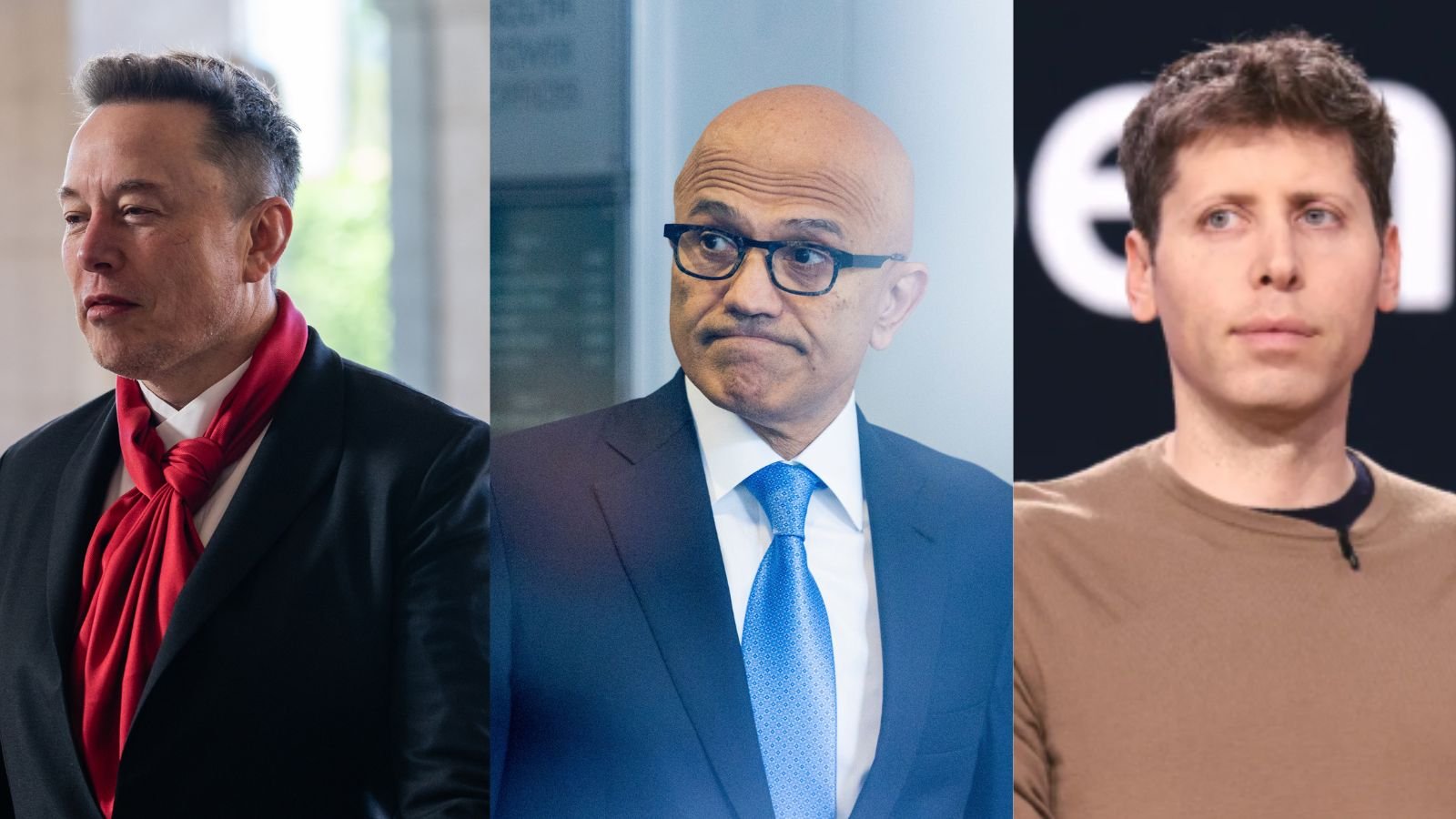
In a rare show of support, OpenAI CEO Sam Altman, SpaceX chief Elon Musk, Google DeepMind chair Demis Hassabis, and several others said they agreed on the need for a slower pace. However, tech industry leaders such as David Sacks and AI commentators were quick to question Amodei’s motivations.
Essentially, the call for a slowdown of frontier-level AI progress has exposed a deep divide between those who believe governments should police AI and others who believe regulatory intervention would crush competition. Here is who said what, and where they stand.
Sam Altman, CEO of OpenAI
“I agree with Dario [Amodei] that we need to pace the frontier. This has been a primary topic of discussions we’ve had at OpenAI in recent weeks. Committing to having independent evaluators with employee-like access is a great idea, and we will do the same,” Altman wrote on X on Saturday.
Amid alarming instances of its AI agents behaving in unintended ways, OpenAI had paused training on its latest and most capable AI model, GPT-6 Astra, for a little more than two weeks before rolling it out to a limited set of users. The ChatGPT-maker’s largest planned frontier training run reportedly remains on hold while new guardrails are put in place.Story continues below this ad
“We welcome a federal framework that sets consistent safety requirements for frontier AI. But we do not believe we need to wait for an anti-trust exemption or legislation to begin the work of providing this confidence,” Altman wrote in a new X post on Sunday, September 13.
Note, in his essay, Amodei pushed for antitrust waivers as they could potentially block coordination among frontier AI labs to meet the pacing goal. While Altman does not appear to share the same level of concern, OpenAI has already committed to Amodei’s proposal on independent auditors.
“We hope that other companies will learn from our approaches and propose their own; we think shared standards for misalignment, monitoring, and safety will lead to better outcomes. We look forward to collaborating with our colleagues across the industry to formulate the best version of these,” he added.
Elon Musk, CEO of SpaceX
“Dario is right,” Musk said, expressing support for the proposed voluntary slowdown. Back in 2023, Musk was one of the notable signatories of an open letter calling for a pause on AI development. Many tech industry leaders disagreed with the call at that time. However, today, the picture is different.Story continues below this ad
“The AI models of those days were not powerful enough to act as agents in the world in any coherent way, and were not capable of significant deception, manipulation, cheating, or cyberattacks,” Amodei said. For context, Musk used to be a vocal critic of Anthropic once upon a time. However, the tech billionaire who leads the competing AI lab SpaceXAI has since changed tune.
Satya Nadella, CEO of Microsoft
In a post on X on Sunday, Nadella backed Amodei’s proposals like independent auditors and “broader efforts to develop the mechanisms to make this more than just talk”. “We also need to accelerate and spread the benefits of AI, such that they are diffused broadly across countries, communities, and companies. This requires a frontier ecosystem in which both closed and open-source models can thrive. The key is that this cannot be controlled by a handful of entities, but must have broad representation,” he said.
“And for firms, it’s imperative that they retain full control over their unique and tacit knowledge. Every organization should be able to build its own continuous learning loop/hill climbing machine, without becoming dependent on any one model provider, and have the ability to embed its own knowledge into models and weights they control,” he added.
Nadella also announced a ‘Code of Conduct’ for Microsoft’s MAI models developed in-house.Story continues below this ad
Demis Hassabis, Google DeepMind chair
“Dario’s essay points towards the right path forward. The details need working through, but the direction is correct for meeting this critical moment,” Hassabis posted on X.
“This is also why we recently put out our proposal for an industry-wide standards body for frontier AI,” he added. The Standards Body would be responsible for developing assessment protocols and working with appropriate federal agencies and the US National Labs to conduct testing in areas relevant to national security, according to the Nobel Laureate.
David Sacks, technology advisor to US President Trump
Sacks, a frequent critic of Amodei, questioned why tech companies needed government intervention to slow down their AI development when nothing was stopping them from doing just that — particularly as they pursued a wildly ambitious goal to create so-called superintelligence, or AI that is far more intelligent than humans.
“Stop pretending the motivation to slow down is purely altruistic,” he said in a social media post. “The easiest way not to build superintelligence is for you to agree not to build it. Demanding your preferred regulatory framework as the price of that will look like blackmail of the public and the political system,” Sacks added.Story continues below this ad
Clément Delangue, CEO of Hugging Face
Delangue said that AI safety would not “be solved behind the closed doors of a handful of frontier labs.” Hugging Face is one of the real-world platforms that was compromised by OpenAI’s misaligned agents. Earlier this month, Nvidia agreed to buy Hugging Face for $12.9 billion.
Hugging Face also launched the Open Alignment Initiative and has said that it has requested to be part of Anthropic’s embedded evaluators programme. “Let’s make AI safer by making it more transparent!” Delangue added.
Aidan Gomez, CEO of Cohere
“Should a handful of select, market-dominant AI companies from Silicon Valley get to define the rules and safety standards of a generational technology for the entire world?” said Aidan Gomez, CEO of Canadian AI startup Cohere, in an essay Sunday.
“These oligopolies are now requesting to bend competition rules and be permitted to dictate the terms for everyone else. A sheep in wolf’s clothing, a cartel by any other name,” he added.Story continues below this ad
Jensen Huang, CEO of Nvidia
Huang has not yet weighed in on Amodei’s warnings that the frontier AI race is moving too fast and needs to be paced out. However, the Nvidia chief has previously argued that AI labs’ safety concerns are self-serving. At a conference in San Francisco last week, Huang said AI labs were emphasising security issues because they planned to introduce cybersecurity products.
“What better way to create demand than to create a problem? Who doesn’t want their market to be hysterical about their product and line up around the corner for it?” Huang said.
Huang has previously criticised Amodei, saying, “Dario thinks he’s the only one who can build this safely and therefore wants to control the entire industry.” The Anthropic co-founder had vehemently denied this notion as an ‘outrageous lie’ at that time.